What My Limitations Taught Me About Leadership (Part 1)
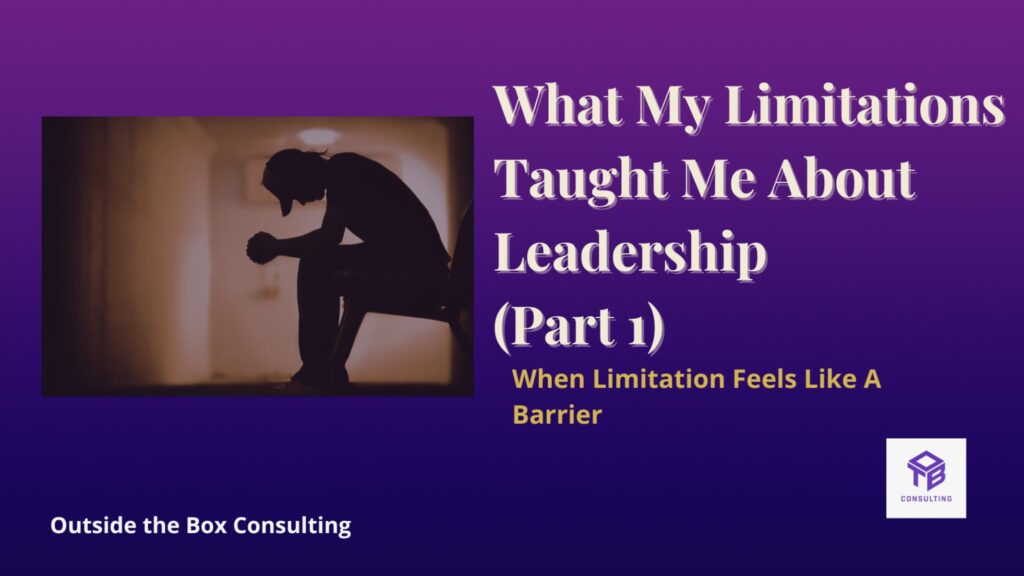
When Limitation Feels Like a Barrier There are moments in life that shape you long before you understand why they matter. For me, one of those moments happened in kindergarten. The Day My Limitation Was Put on Display I was sitting in class, working on an art project. Like many kindergartners, I was trying to find the supplies I needed—specifically, glue sticks. But I couldn’t see where they were. Being legally blind, I experienced the classroom differently than the other students. So I did what I thought I was supposed to do. I asked for help. What happened next is something I have never forgotten. My teacher walked over, took me by the back of the head, and physically guided me to the bucket where the glue sticks were. Then she shoved my head down toward them and said, in front of the entire class: “There they are. Don’t forget it.” In that moment, something shifted. Not just because of what she did. But because of what it meant. The Weight of Shame I remember feeling exposed. Not just different—but singled out. What had always been my quiet limitation—my vision—was suddenly put on display for everyone to see. And it wasn’t handled with care. It was handled with force, frustration, and embarrassment. I felt shame. I felt like the spotlight was on me—but for all the wrong reasons. And I began to carry a new internal message: If this is my weakness… then I have to overcome it. I have to prove myself. I have to make sure this never happens again. When Limitation Feels Like Isolation That moment didn’t exist in isolation. Growing up, I often felt like I didn’t quite belong. I wasn’t picked for teams at recess.I didn’t naturally find my place in social groups.I often felt like I was on the outside looking in. Even in environments where accommodations were made for me, there was still a cost. I would leave the classroom to take tests in a separate space. Sometimes that felt helpful—quiet, focused. But other times, it was just another reminder: You are not like everyone else. You don’t quite fit here. And over time, that feeling begins to shape how you see yourself. The Hidden Narrative Leaders Carry Many leaders carry a story like this. Not always the same details—but the same feeling. A moment where: And without realizing it, those moments form a narrative: I have to work harder.I have to prove myself.I have to compensate for what I lack. That narrative can drive achievement. But it can also create pressure. And over time, it can become exhausting. What I Didn’t Understand Then At that age, I didn’t have the language for what was happening. I didn’t think in terms of leadership. I didn’t think in terms of formation. I only knew that I felt different. And that I had to figure out how to navigate a world that didn’t always understand me. But looking back now, I can see something I couldn’t see then. Those moments weren’t just painful. They were formative. An Invitation to Reflect If you’ve ever felt like your limitations set you apart… If you’ve ever experienced the weight of being misunderstood or overlooked… If you’ve ever carried the quiet pressure to prove yourself… You’re not alone. And more importantly—you’re not disqualified. You may be in the early stages of something deeper. Something that is still being formed. Looking Ahead In Part 2, I’ll share how those early experiences didn’t just create challenges—they shaped the way I lead today. Because over time, I’ve learned something that I couldn’t have understood back then: Limitation is not just something to overcome. It can become one of the most powerful tools in leadership formation. Work With Me If your organization is seeking leadership development or looking to build a culture where leaders grow through real-life experience—not just theory—I would welcome the opportunity to connect. Together, we can explore how leadership is formed through calling, limitation, and faithful influence.
Leadership Doesn’t Start with Confidence—It Starts with Calling
Why Purpose Matters More Than Readiness One of the most common reasons people hesitate to lead is simple: They don’t feel ready. They don’t feel confident enough.They don’t feel experienced enough.They don’t feel prepared enough. And so they wait. They wait until they feel stronger. More certain. More capable. But what if leadership doesn’t begin with confidence? What if it begins somewhere else entirely? The Myth of Readiness Many leadership models suggest that people step into leadership when they are ready. When they have the skills.When they have the experience.When they have the confidence. But if that were true, very few people would ever lead, because confidence is often the result of leadership—not the starting point. A Different Beginning In my own journey, and in the lives of many leaders I’ve worked with, leadership tends to begin in a different place. Not with confidence. But with calling. Calling is the quiet but persistent sense that your leadership matters. That you are meant to contribute.That you are meant to serve.That your presence and influence have purpose. Calling does not eliminate uncertainty. It simply gives you a reason to move forward despite it. Why Calling Comes First Calling answers a deeper question than confidence ever can. Confidence asks: Can I do this? Calling asks: Why does this matter? When leaders are grounded in calling, they can move forward even when they feel uncertain. Without calling, leadership becomes performance. With calling, leadership becomes purpose-driven. When Calling Meets Limitation Calling does not remove difficulty. In fact, it often leads directly into it. Leaders quickly discover: they don’t have all the answers they don’t feel fully prepared they face challenges they did not expect This is where many leaders begin to doubt themselves. But this is also where leadership formation begins. Calling creates the willingness to step forward. Limitation creates the opportunity to grow. The Courage to Begin Leadership requires a kind of courage. Not the courage of certainty. But the courage of response. The willingness to say: “I may not feel ready, but I believe this matters.” That is often the first real step of leadership. A Framework for Leadership Formation This is why the first movement of The God Can Use You Leadership Framework is calling. Leadership grows through: Calling Recognizing that your leadership has purpose. Limitation Facing where you are not enough on your own. Formation Allowing those challenges to shape your character. Faithful Influence Using your leadership to develop others. But none of this begins without calling. For the Leader Who Feels Uncertain If you have been waiting to feel confident before stepping forward… If you have questioned whether you are ready… If you have felt the tension between desire and doubt… Consider this: You may not need more confidence to begin. You may need clarity of calling. Final Thought Confidence grows over time. Calling invites you to begin. The question is not whether you feel ready. The question is whether you are willing to respond. Work With Me If your organization is exploring leadership development or seeking to strengthen purpose and clarity among leaders, I would welcome the opportunity to connect. Together, we can help leaders grow through calling, limitation, and faithful influence.
Why Good Leaders Get Stuck — And How Great Leaders Keep Growing
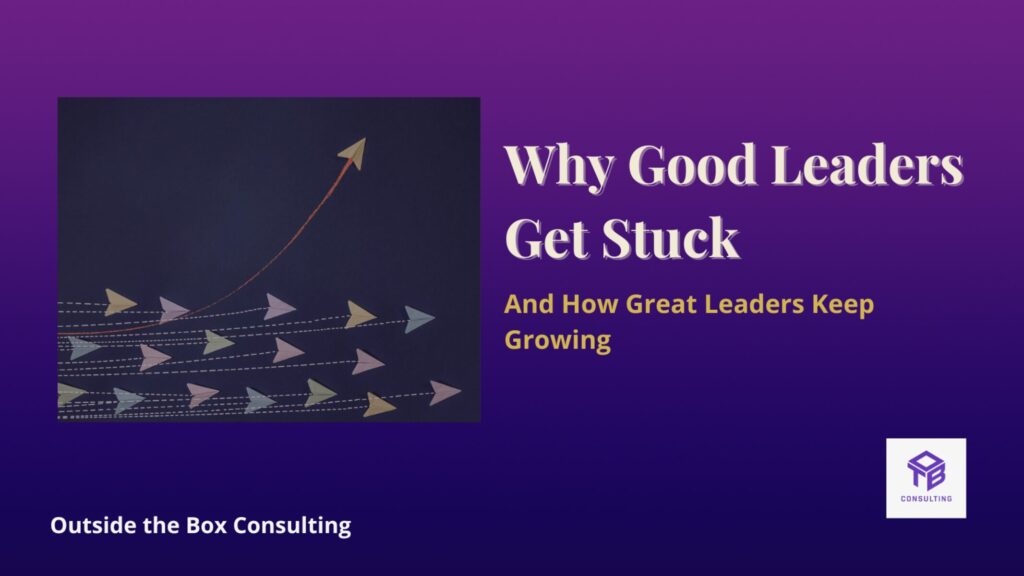
Leadership success can become leadership limitation. What helped you grow early in your journey may quietly begin to hold you back later. The habits that once made you effective can become routines. Confidence can become defensiveness. Experience can become resistance. Many good leaders do not fail because they lack talent. They stall because they stop growing. Three Signs a Leader Is Getting Stuck 1. You defend old methods instead of exploring new ones Every leader develops habits and strategies that once produced success. The danger comes when yesterday’s methods become untouchable. Markets change, teams change, cultures change, and people change. Leaders who cling too tightly to what worked before often miss what is needed now. Strong leaders honor past success, but wise leaders remain open to better ways forward. 2. You confuse activity with progress Many leaders are exhausted not because they are advancing, but because they are constantly reacting. Full calendars, endless meetings, and nonstop emails can create the illusion of momentum. Yet motion is not always movement. Progress requires clarity, priorities, and intentional action. Great leaders regularly pause long enough to ask whether all their effort is producing meaningful results. 3. You stop inviting honest feedback Growth becomes difficult when leaders only hear affirmation. As responsibility increases, people sometimes become more cautious about telling leaders the truth. Without realizing it, leaders can become surrounded by agreement, silence, or partial honesty. Healthy leaders intentionally create spaces where trusted people can speak candidly. Honest feedback may be uncomfortable, but it often becomes the doorway to the next level of leadership. Which of these three traps is most dangerous for you right now? How Great Leaders Keep Growing Great leaders stay teachable. They ask questions.They evaluate themselves honestly.They remain curious.They learn from younger voices and seasoned voices alike. Most importantly, they understand that growth is never finished. A Leadership Question Worth Asking What worked in your last season that may be limiting your next season? That question takes courage—but it creates breakthrough. Final Thought Good leaders build success. Great leaders keep becoming. Growth is still available to you. Call to Action If your team or organization feels stuck, it may not need more effort—it may need a new perspective. At Outside the Box Consulting, I help leaders think differently, grow intentionally, and lead with conviction.
The Leadership Myth That’s Holding You Back: You Have to Be Strong
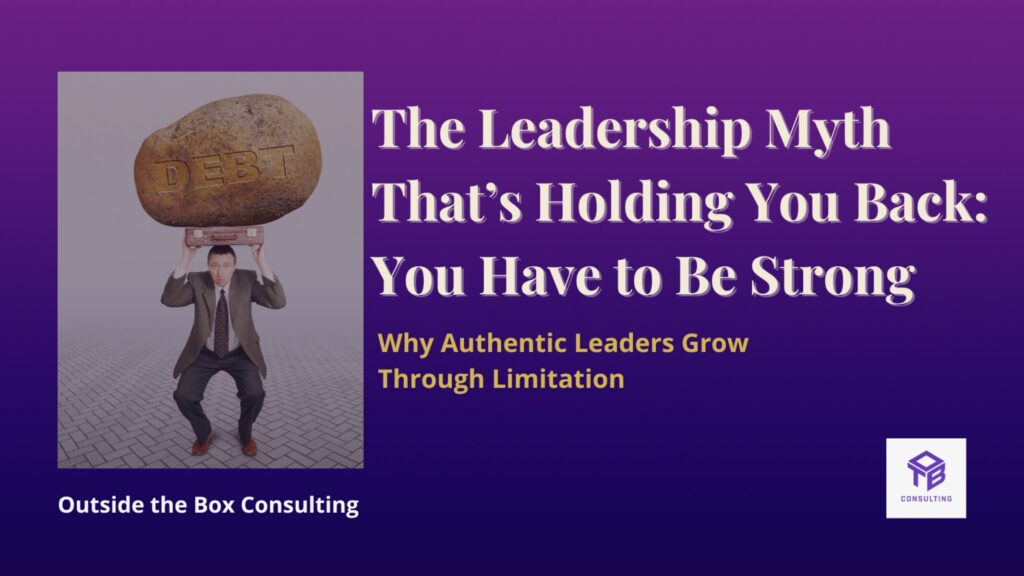
Why Authentic Leaders Grow Through Limitation By: Dr. Benjamin Bowman Many leaders are carrying a burden they were never meant to bear. It is the burden of appearing strong at all times. Strong enough to have answers.Strong enough to stay composed.Strong enough to absorb pressure.Strong enough to never let others see uncertainty. For many leaders, this pressure becomes exhausting. And yet, it is one of the most common myths in leadership today. The belief that effective leadership requires constant strength. It does not. Where This Myth Comes From Most leaders inherit this assumption long before they ever hold a title. We are taught that leaders should be: Some of these traits can be valuable. But when strength becomes a performance, leadership becomes fragile because no leader is strong all the time. No leader has all the answers. No leader leads without moments of uncertainty. The Cost of Performing Strength When leaders believe they must always appear strong, several things often happen. 1. Isolation Leaders stop asking for help. 2. Burnout They carry pressure privately. 3. Defensive Leadership They resist feedback or vulnerability. 4. Shallow Trust Teams sense image management rather than authenticity. This kind of leadership may look impressive for a season, but it is difficult to sustain. What Real Strength Looks Like Real leadership strength is different. It is not the absence of weakness. It is the willingness to lead honestly through it. Real strength looks like: This kind of strength creates trust, and trust is one of the foundations of healthy leadership. Why Limitation Can Form Leaders Many of the moments leaders most want to avoid are the very moments that shape them. When plans fail.When confidence is shaken.When help is needed.When the path forward is unclear. These moments can expose weakness, but they can also develop: Leadership through limitation often becomes leadership with depth. A Better Leadership Model This is one reason I developed The God Can Use You Leadership Framework. Leadership often grows through four movements: Calling Knowing why your leadership matters. Limitation Recognizing where you cannot rely on yourself alone. Formation Allowing challenge to shape character. Faithful Influence Using leadership to develop and empower others. This framework offers a healthier alternative to performative strength. For the Leader Who Feels Tired If you are exhausted from trying to appear strong… If leadership feels heavier than it once did… If you are carrying pressure in silence… Consider this: You may not need to become stronger in the way you think. You may need to become more honest, more grounded, and more formed. That is a deeper kind of strength. Final Thought The greatest leaders are rarely those who appear invincible. They are often those who have learned how to lead with humility, courage, and authenticity. The question is not whether you always look strong. The question is whether you are becoming strong in the ways that matter most. Work With Me If your organization is seeking leadership development, healthier leadership culture, or transformational growth, I would welcome the opportunity to connect. Together, we can help leaders grow through calling, limitation, and faithful influence.
Why Great Leaders Don’t Fit Inside the Box
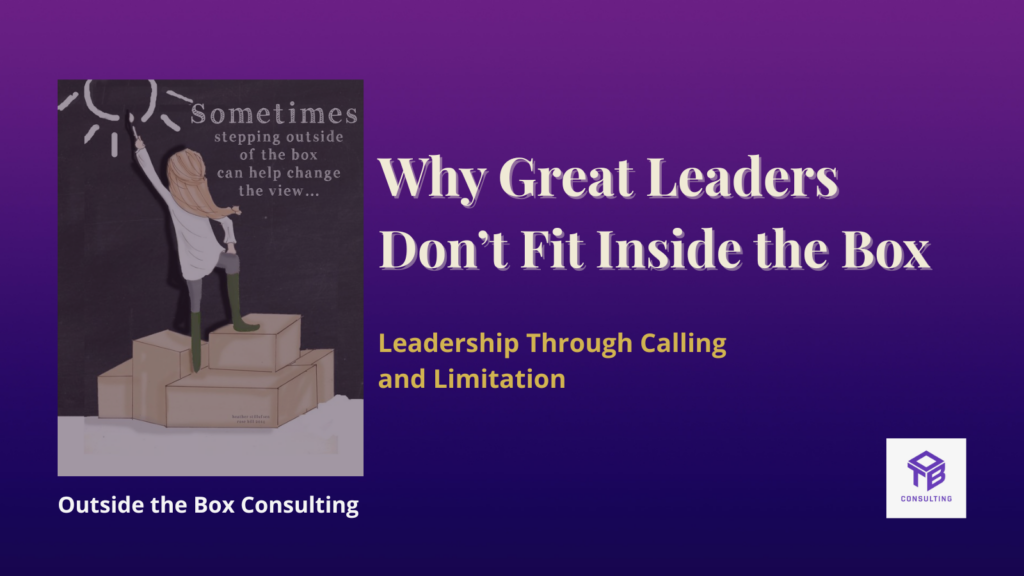
Leadership Through Calling and Limitation By: Dr. Benjamin Bowman The First Time I Realized I Didn’t Fit the Box I remember sitting in a kindergarten classroom, already aware that I experienced the world differently than the other students. Born legally blind, I needed accommodations. I couldn’t see what others could see. I processed things differently. And even at that age, I could feel it—the subtle awareness that I didn’t quite fit. Not in a dramatic way.Not in a discouraging way. Just in a quiet, persistent realization: I was operating outside the expected norm. At the time, I didn’t have language for it. I didn’t call it “leadership” or “formation.” I simply knew that the systems around me weren’t built with me in mind—and that I would have to learn how to navigate them differently. Looking back now, I can see something I couldn’t see then: That early experience wasn’t a barrier to leadership. It was the beginning of it. The Invisible Box Most Leaders Live In There are boxes we never see—but we feel them. They are built over time through expectations, culture, and assumptions about what leadership is supposed to look like. Leaders are supposed to be confident.They are supposed to have answers.They are supposed to be strong.They are supposed to be certain. And so, many leaders spend their lives trying to live inside a box they were never meant to fit. The Problem with Traditional Leadership Models Much of what passes for leadership development still reinforces this box. It teaches: Leadership is about having it all together Strength means never showing weakness Influence comes from confidence and certainty The best leaders are the most capable people in the room But these assumptions create fragile leadership. They leave little room for: honesty growth resilience authentic influence If leadership requires perfection, then most leaders will either burn out—or pretend. A Transformational Leadership Approach What if leadership doesn’t begin with strength? What if it begins with calling—and is shaped through limitation? This is the foundation of what I call The God Can Use You Leadership Framework, a model of leadership development rooted in both spiritual formation and transformational leadership principles. It is built on four movements: 1. Calling Leadership begins with purpose, not performance. 2. Limitation Leadership is refined through challenge, weakness, and need. 3. Formation Character is shaped through surrender, humility, and growth. 4. Faithful Influence Leadership multiplies by investing in others. This model aligns with transformational leadership by focusing not just on outcomes—but on the formation of the leader and the development of others. Why Leadership Through Limitation Matters In today’s leadership landscape, the pressure to perform is constant. Leaders are navigating: organizational uncertainty cultural change increasing expectations personal fatigue and burnout And yet, many are still trying to lead from a place of perceived strength rather than authentic formation. But the most impactful leaders are not the ones who hide their limitations. They are the ones who allow those limitations to shape them. Leadership through limitation produces: humility resilience collaboration deeper trust In other words, it produces the kind of leadership people actually want to follow. Living and Leading Outside the Box To live and lead “outside the box” is not about rejecting structure or responsibility. It is about rejecting the false assumptions that limit what leadership can be. It is about: embracing calling over performance accepting limitation as formation leading with authenticity rather than image investing in people rather than control The leaders who make the greatest impact are not those who fit the mold. They are the ones who grow beyond it. An Invitation for Leaders If you’ve ever felt like you don’t quite fit the traditional leadership mold… If your limitations have felt more like obstacles than opportunities… If you’ve questioned whether you have what it takes to lead… You are not alone. And you are not disqualified. You may be in the very place where your leadership is being formed. The question is not whether you fit inside the box. The question is whether you are willing to step outside of it—and become the leader you are being shaped to be. Work With Me If your organization is seeking leadership development, exploring transformational leadership, or looking to strengthen your leadership culture, I would welcome the opportunity to connect. Together, we can explore how your leaders can grow through calling, limitation, and faithful influence.
God Can Use You: A New Framework for Transformational Leadership